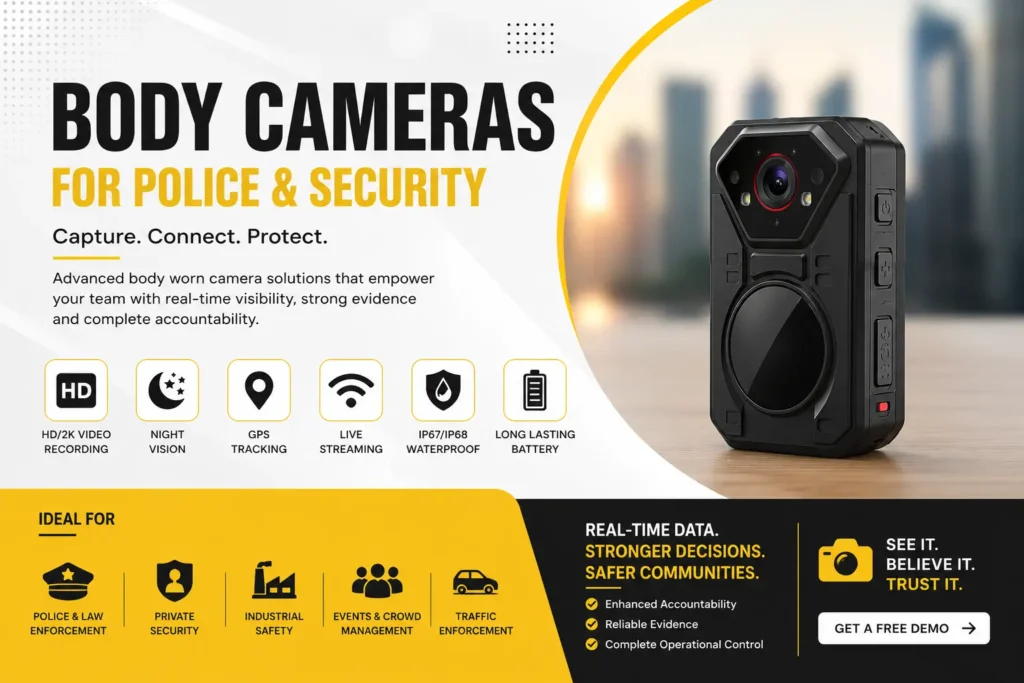
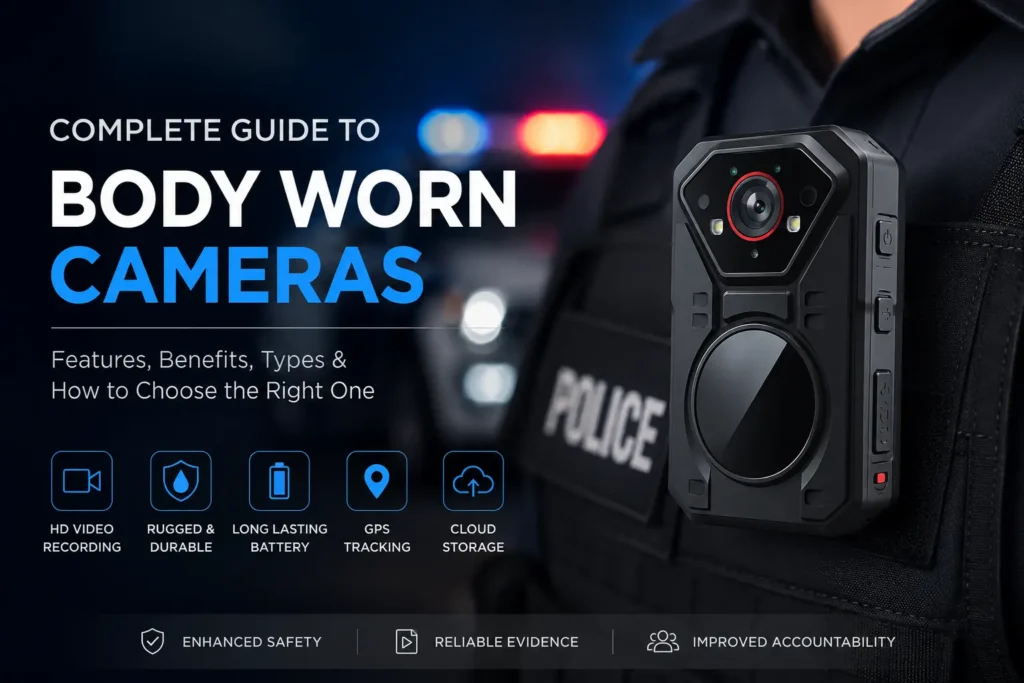
Body worn cameras have become an essential tool for modern security, law enforcement, and industrial operations. From improving accountability to providing real-time evidence, these devices are transforming how organizations manage safety and transparency.
In this complete guide, we’ll cover everything you need to know about body worn cameras — including how they work, key features, benefits, and how to choose the right one.
What is a Body Worn Camera?
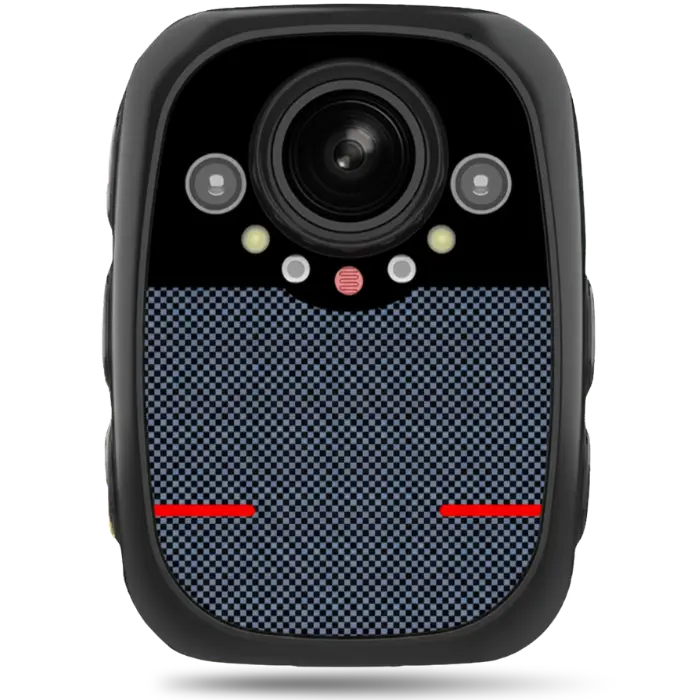
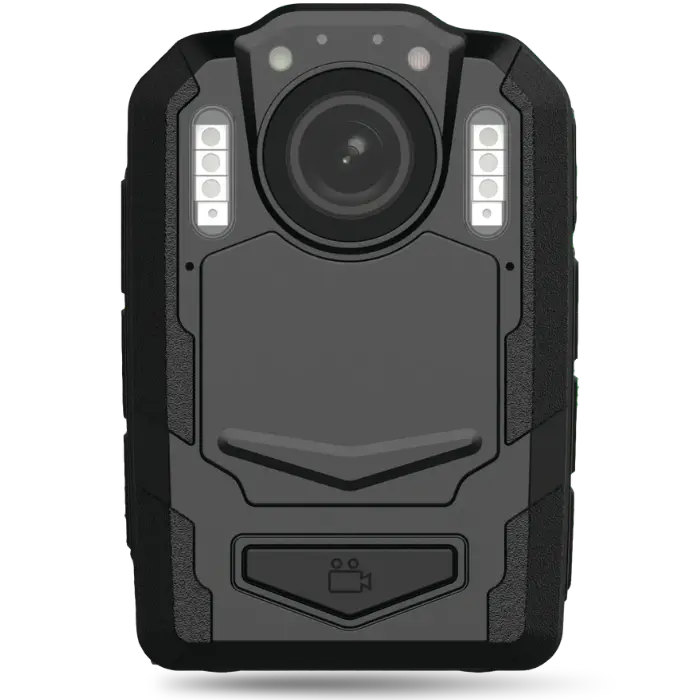
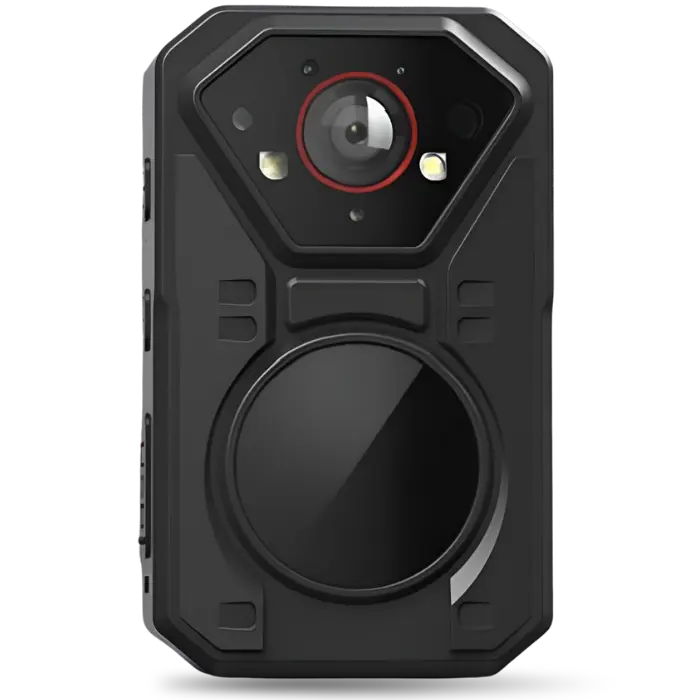
A body worn camera (BWC) is a compact recording device worn on the body, typically on the chest, shoulder, or uniform. It captures audio and video footage in real time, helping document interactions, incidents, and operations.
These cameras are widely used in:
-
- Police and law enforcement
-
- Security agencies
-
- Traffic enforcement
-
- Industrial and construction sites
-
- Logistics and field operations
According to the National Institute of Justice, body worn cameras improve transparency and can help strengthen public trust when used effectively.
How Do Body Worn Cameras Work?
Body cameras operate through a simple yet powerful process:
-
- Recording Activation – Manual (button press) or automatic triggers
-
- Video Capture – High-definition recording with wide-angle lens
-
- Storage – Internal memory or cloud-based systems
-
- Data Transfer – Via docking stations or wireless upload
-
- Playback & Evidence Management – Controlled through software platforms
Many modern devices also support live streaming, GPS tracking, and remote access.
Key Features to Look For
Choosing the right body camera depends on your use case. Here are the most important features:
 Video Quality
-
- Full HD (1080p) or 2K/4K resolution
-
- Wide-angle lens (120°–170°)
 Night Vision
-
- Infrared (IR) LEDs for low-light environments
 Battery Life
-
- 8–12 hours standard
-
- Replaceable or backup battery options
 Storage
-
- 64GB to 256GB internal storage
-
- Cloud storage compatibility
 GPS Tracking
-
- Real-time location tracking for field personnel
 Durability
-
- IP ratings (IP65, IP67, IP68) for water and dust resistance
Benefits of Body Worn Cameras
 Improved Accountability
Footage provides unbiased evidence of events.
Enhanced Safety
Acts as a deterrent against misconduct or aggression.
Evidence Collection
High-quality video supports investigations and legal processes.
Operational Efficiency
Helps supervisors review and improve field performance.
A study referenced by the Urban Institute highlights that body cameras can reduce complaints against officers and improve behavior during interactions.
Body Cameras vs CCTV
| Feature | Body Cameras | CCTV |
|---|---|---|
| Mobility | Portable | Fixed |
| Coverage | First-person view | Area-based |
| Use Case | Field operations | Static surveillance |
| Flexibility | High | Limited |
 Best practice: Use both together for complete security coverage.
Industries Using Body Worn Cameras
 Law Enforcement
For traffic monitoring, patrol recording, and evidence collection.
 Private Security
Security guards use body cams for incident recording and deterrence.
 Construction & Industrial
Improves safety compliance and incident tracking.
 Logistics & Transportation
Useful for driver monitoring and delivery verification.
How to Choose the Right Body Worn Camera
Before buying, consider:
-
- Your use case (security, police, industrial)
-
- Required video quality
-
- Battery duration
-
- Storage & data management system
-
- Environmental conditions (IP rating)
-
- Integration with software or dispatch systems
Advanced Body Camera Systems
Modern systems go beyond just recording:
-
- Live streaming to control room
-
- Cloud-based evidence management
-
- AI-based video analytics
-
- Integration with dispatch systems
-
- Real-time alerts and monitoring
These features are especially useful for large organizations and government deployments.
Legal and Privacy Considerations
Usage of body worn cameras must follow regulations:
-
- Informing individuals when recording (in many jurisdictions)
-
- Secure storage of recorded data
-
- Controlled access to footage
You can refer to guidelines from Bureau of Justice Assistance for best practices in implementation.
Future of Body Worn Cameras
The future is moving towards:
-
- AI-powered video analysis
-
- Facial recognition (regulated use)
-
- Cloud-first infrastructure
-
- Integration with smart city systems
Body cameras will become a core part of integrated security solutions.
Conclusion
Body worn cameras are no longer optional — they are a critical tool for safety, accountability, and operational efficiency. Whether you are managing a security team, running industrial operations, or handling law enforcement duties, investing in the right body camera system can significantly enhance performance and trust.
 Need a Reliable Body Worn Camera Solution?
Looking for high-performance body cameras for your organization?
-
- Bulk supply
-
- Custom solutions
-
- Integration with dispatch systems
 Call to Action
Looking for the right walkie talkie for your business?
Contact us today or explore our range of professional body worn cameras.
Visit: www.pcomsolutions.com Explore professional communication solutions
Body Cameras for Police & Security: Enhancing Accountability & Field Intelligence

UHF vs VHF Walkie Talkies: Complete Comparison Guide (2026)
Analog vs Digital Walkie Talkies: Which One Should You Choose in 2026?