
How Security Agencies Benefit from Body Cameras
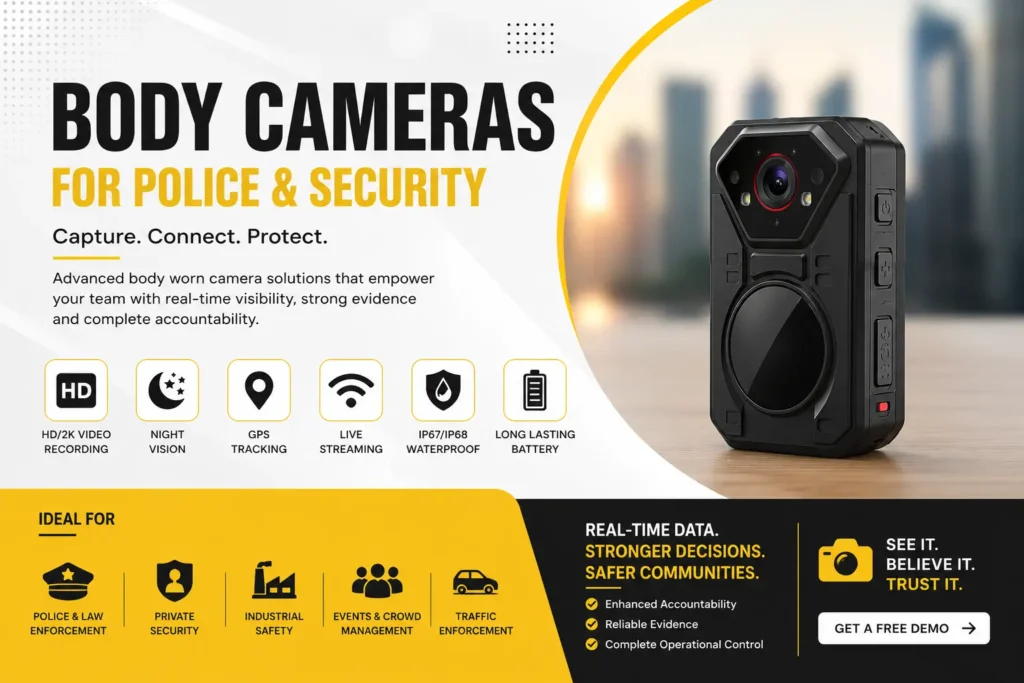
Private security operations face unique challenges — large areas, unpredictable situations, and limited supervision. Body cameras act as a force multiplier, enabling better control and visibility.
Practical Benefits:
- Instant recording during incidents
- Visual proof for client reporting
- Enhanced guard accountability
- Remote monitoring through live feeds
Organizations increasingly combine body cameras with centralized monitoring platforms for better coordination.
Beyond Recording: Smart Body Camera Capabilities
Modern devices go far beyond simple video capture. They are now part of a connected security ecosystem.
Advanced Features Include:
- Live streaming to control rooms
- GPS-based personnel tracking
- Event tagging and instant playback
- Cloud-based evidence management
- SOS alerts for emergency situations
Guidelines from the Bureau of Justice Assistance emphasize the importance of proper data management and secure handling of recorded footage in such systems.
Real-World Use Cases
🚓 Traffic & Road Safety Enforcement
Officers use body cameras to record violations, ensuring accurate and unbiased documentation.
🏢 Corporate & Facility Security
Guards can capture incidents in real time, improving reporting and reducing liability risks.
🚧 Construction & Industrial Sites
Helps monitor safety compliance and document workplace incidents.
🎤 Events & Public Gatherings
Provides situational awareness and helps manage crowd-related risks.
Body Cameras vs Traditional Surveillance
While CCTV remains essential, it has limitations. Body cameras fill those gaps.
| Capability | Body Cameras | CCTV Systems |
|---|---|---|
| Mobility | High | Fixed |
| Perspective | First-person | Area-based |
| Incident Detail | High | Moderate |
| Flexibility | Dynamic | Static |
👉 The most effective approach is integration, not replacement.
Key Considerations for Deployment
Before implementing body cameras in police or security operations, organizations should evaluate:
🎯 Operational Needs
- Patrol-based or static security
- Indoor vs outdoor usage
🔐 Data Security
- Encryption and controlled access
- Compliance with local regulations
🔋 Reliability
- Long battery life for full shifts
- Durable build for field conditions
🔄 Integration
- Compatibility with dispatch systems
- Centralized monitoring capability
Best practices from the International Association of Chiefs of Police highlight the need for clear policies, training, and proper usage protocols.
Challenges & How to Overcome Them
⚠️ Data Storage Management
Solution: Use cloud-based or docking station systems
⚠️ Privacy Concerns
Solution: Define clear recording policies and access control
⚠️ Device Misuse or Downtime
Solution: Regular audits and automated recording triggers
The Future of Body Cameras in Security
The next generation of body cameras will focus on:
- AI-driven incident detection
- Real-time facial recognition (regulated environments)
- Integration with smart city systems
- Automated reporting and analytics
These advancements will transform body cameras into intelligent decision-support tools, not just recording devices.
Conclusion
For police and security teams, body cameras are more than technology — they are a strategic advantage. They improve operational transparency, enhance safety, and provide reliable evidence when it matters most.
Organizations that adopt modern body camera solutions gain stronger control, faster response capabilities, and greater trust from stakeholders.
🚀 Upgrade Your Security Operations
Looking to implement body cameras for your team?
We offer:
- Professional-grade body worn cameras
- Solutions for police, security, and industry
- Integration with dispatch and monitoring systems
 Call to Action
Looking for the right walkie talkie for your business?
 Visit: www.pcomsolutions.com Explore professional communication solutions
👉 Contact us today for a customized solution.

Motorola XIR P3688: Features, Comparison & Why It Replaces GP328

How a Walkie-Talkie Works: Components, RF Technology and Specifications Explained

How Walkie Talkies Work Without Network (Complete Guide)

Very nice article, exactly what I was looking for.